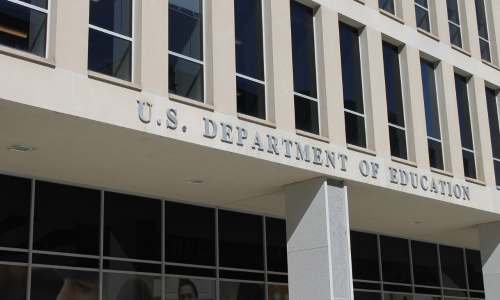
 A new federal rule is poised to reshape how the government holds college programs accountable and whether millions of students can access federal student aid.
On April 20, 2026, the US Department of Education (ED) published a Notice of Proposed Rulemaking (NPRM) establishing the Student Tuition and Transparency System (STATS) and a new framework for programmatic earnings accountability. Comments are due May 20, and the National College Attainment Network (NCAN) encourages its members to submit comments if interested.
The proposed rule interprets provisions from the One Big Beautiful Bill Act (OBBBA), enacted in July 2025, which significantly restructured federal student aid policy. Here's what advocates, programs, and students need to know.
A New Unified Accountability Framework
The NPRM consolidates three overlapping regulatory systems into one. It replaces the existing Financial Value Transparency (FVT) framework with STATS, updates Gainful Employment (GE) regulations, and implements the new earnings accountability requirements created by OBBBA. The goal is a unified system that applies the same accountability standards across all Title IV programs: for-profit and trade schools, community colleges, and B.A.-granting colleges and universities.
The New Earnings Test
The biggest policy change included is an "earnings premium measure.” This test compares the earnings of program completers who received Title IV aid against a relevant earnings threshold.
- For undergraduate programs (bachelor's and associate degrees), completers must earn more than the median earnings of working adults aged 25–34 who hold only a high school diploma.
- For graduate programs, the benchmark is the median earnings of similarly aged adults who hold only a bachelor's degree.
These thresholds are based on US Census Bureau data and can be calculated at the state or national level depending on where a program draws most of its students. Earnings are measured in the fourth tax year after a student completes a program and are drawn from IRS data. Programs that fail this test in two out of any three consecutive years are designated "low-earning outcome programs" and lose access to the Federal Direct Loan Program. Once a program loses Direct Loan eligibility, the institution must halt new student enrollments. In cases where ED determines it is in the best interest of currently enrolled students, an institution may continue operating a failing program for up to three years or the full normal duration of the program (whichever if shorter) to allow students to complete.
Institutions may appeal ED's determinations and, after a two-year waiting period, may seek to reestablish eligibility. Programs that are voluntarily discontinued remain ineligible until they meet the new requirements. There are also stakes for colleges and universities at large. Institutions where more than half of their Title IV dollars support low-earning programs can be placed on provisional status and risk losing Title IV eligibility altogether.
Student Tuition and Transparency System (STATS)
Beyond the accountability measures, the NPRM renames the Financial Value Transparency system as STATS and expands public disclosure requirements. ED will maintain a website with program-level data including enrollment, cost, median earnings, the earnings premium measure, and the median length of time students take to complete a program. Institutions must prominently link to this website on any web page containing academic, cost, financial aid, or admissions information. Prospective students must receive this information before signing an enrollment agreement or making a financial commitment and enrolled students must receive it annually.
Disclosure for Pell Grant Recipients
The NPRM adds a notable new disclosure requirement: institutions must notify students who are eligible for Pell Grants of their remaining lifetime eligibility (LEU) and explain that all Pell funds received for enrollment in the program count against that lifetime limit. This warning must be provided at the time of disbursement. For low-income students, for whom Pell is often the primary source of grant aid, this disclosure could be consequential in how they evaluate whether a program is worth the cost of their limited eligibility. NCAN strongly supports providing this information to students regularly to help them make informed decisions about how to use their limited Pell eligibility, and while this information is currently accessible at studentaid.gov, it’s hard to find. Proactively sending this information to students is an important step forward.
The Scale of Potential Impact
ED's regulatory impact analysis projects that 5.1% of program out of approximately 129,000 would fail the proposed earnings test. Failure rates vary significantly by sector: 7.3% for two-year institutions, 10.7% for graduate-only institutions, and 2.1% for four-year institutions. ED estimates that approximately 825 million students are projected to enrolled in programs that fail the earnings test though this estimate is complicated by the fact that ED lacks complete earnings data for 76% of programs due to IRS privacy restrictions. In doing its analysis, ED assumed that the failure rate of programs for which it has data would match the failure rate of programs for which it does not have earnings data.
Why This Matters for College Access
For college access advocates, the NPRM represents both an opportunity and a concern. Stronger accountability for low-value programs could protect students, particularly low-income students who rely on Pell Grants and federal loans, from investing time and money in credentials that don't pay off. At the same time, the breadth of potential program failures raises important questions about whether students will lose access to programs in fields that provide real community benefit but historically lower wages, such as early childhood education or classical music performance, and whether the earnings test alone is an adequate measure of a program's value.
Comments on the NPRM are due May 20, 2026. Stakeholders with perspectives on how these rules will affect student outcomes — especially for low-income, first-generation, and adult learners — should make their voices heard.